The following is the official “After Action Report” for the 346th Regiment, April 1945, from the 87th Infantry Archives
Categories
Post contains background information
The following is the official “After Action Report” for the 346th Regiment, April 1945, from the 87th Infantry Archives
From 346th Infantry:
CROSSING THE RHINE: Training schedules were set up with special attention given to practice in river crossing. On March 23 the Regiment moved to a new assembly area near Oppenhausen, Germany. Company K joined Task Force Sundt, commanded by Lt. Col. Sundt for the purpose of clearing the area East of the Rhine River and spearheading an attack with the armor.
At 0200 hours the morning of March 26th, the Regiment crossed the Rhine at Boppard and moved to an assembly area. The attack continued with light resistance, and the towns of Kehlbach, Singhofen, Frucht, Kondorff, Biebrich, Schonborn, Attenhausen and Birlenbach were captured. The First Army was contacted at Diez near Limburg. The attack was now rolling forward like the Johnstown Flood. Progress was temporarily stopped by the roads being blocked by elements of the Ninth Armored Division and resulted in the entire Division assembled near Kraftsolms to wait until the transportation problem was cleared up.
At the end of March, K Company was attached to Task Force Sunde
Following the crossing of the Rhine River, German resistance crumbled to such an extent that it was essential to form a hard-hitting, fast moving armored unit to reach into the German rear areas, disrupt communications, cut up German administrative units and installations. Such a force was organized and placed under the command of Lt. Colonel Harold S. Sundt and was to be known as Task Force Sundt.[…] Units comprising the Task Force were the 607th TD Battalion, less A and C Companies, plus Company A of the 735th Tank Battalion, the 87th Reconnaissance Troupe, K Company of the 346th Infantry Regiment, 2nd Platoon Company C of the 312th Engineer Battalion and supported by fires from the 155 mm howitzers of the 335th FA Battalion. The Task Force was divided into three hard hitting companies plus a CP group. Each company consisted of a platoon of tanks, platoon of TD’s, platoon of infantry, riding on the armored vehicles, and a platoon of the 87th Reconnaissance Troupe. The CP group contained the remaining forces. It crossed the Rhine at Boppard on a pontoon bridge and assembled six miles to the northeast at Dachsenhausen which was the limit of the Division advance.
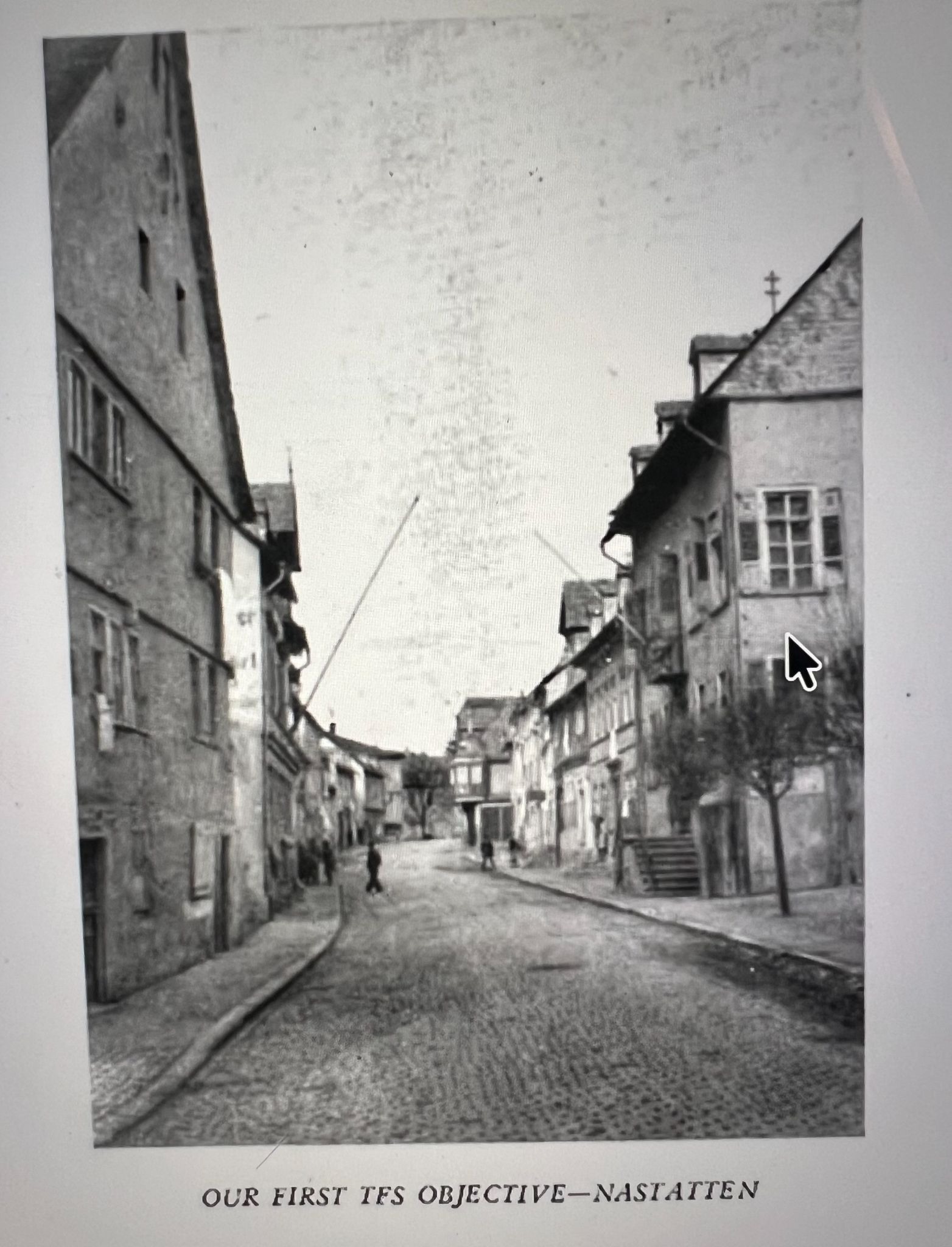
The Task Force’s first objective was Nastatten, 12 miles southeast of Boppard. At 0545 March 27th the Task Force took off for Nastatten, the plan of attack being to advance along the high ground to Ruppertshaffen. and thence to Nastatten. By 0830 the Task Force had reached Ruppertshaffen, three miles west of Nastatten, where it assembled and regrouped.
The third Task Force Company, under the command of 1st Lt. Glen J. Doman, 346th Infantry Regiment [K Company], made the attack on the town at 0915. […] The infantry under 2nd Lt. Robert L. Picher, 346th Infantry Regiment, [K Company] swept through the town and cleared all enemy resistance […]
[…]
Captured enemy documents and statements of prisoners indicated that the area in the vicinity of Butzbach was an assembly area for stragglers of the Rhine defenses. Accordingly, on March 30 the Task Force received a mission of securing Hoch-Weisel, three miles southwest of Butzbach, and sweeping the woods to the north and west. At 0800 the 3rd Company moved there and the 3rd Reconnaissance Platoon and the Pioneer Platoon occupied positions between Butzbach and the woods to the west. The day was spent sending patrols through these woods. During the day the Task Force destroyed nine 20mm AA guns, eight 37mm AA guns on 21/2 ton trucks, one 40mm AA gun, three 105mm guns, seventeen 75mm AA-AT guns, four 88 AA-AT guns, and twenty-three vehicles. 519 prisoners were taken.
[…]
April 1st found all missions assigned accomplished, the Task Force dissolved and the Battalion assembled near Kleeberg. During the Task Force’s operation, it had taken 1485 prisoners and had advanced 76 miles.
From April 10th to the 20th, Task Force Sundt was reconstituted, again with K Company attached
The dash made by this 2nd Task Force Sundt netted 109 miles and 1344 prisoners in nine days. Once the break was made through the Jerry’s lines, the scene became a mad rush, fighting through or bypassing defenses – speed was the watchword. To stop was to be pinned down; to continue was to crush Jerry’s frugal attempts to delay and leave a string of dead Jerries and burning German vehicles behind. The Germans had pitted the 11th Panzer Division, the so called “Ghost Division” in the 87th Division zone to “stem the tide”, but to no avail. The speed with which the Task Force operated was too great to permit a defensive position to be properly set up. 2 tanks, 11 trucks, 4 half-tracks, 3 armored cars, 6 wagons, 3 tractors, 3 motorcycles, 3-75mm guns, and 1-105mm gun were destroyed in comparison with our losses of 1 tank, 2-M8’s, 1-M20, and 1 half-track.
The following is the official “After Action Report” for the 346th Regiment, March 1945, from the 87th Infantry Archives
From the 346th Infantry:
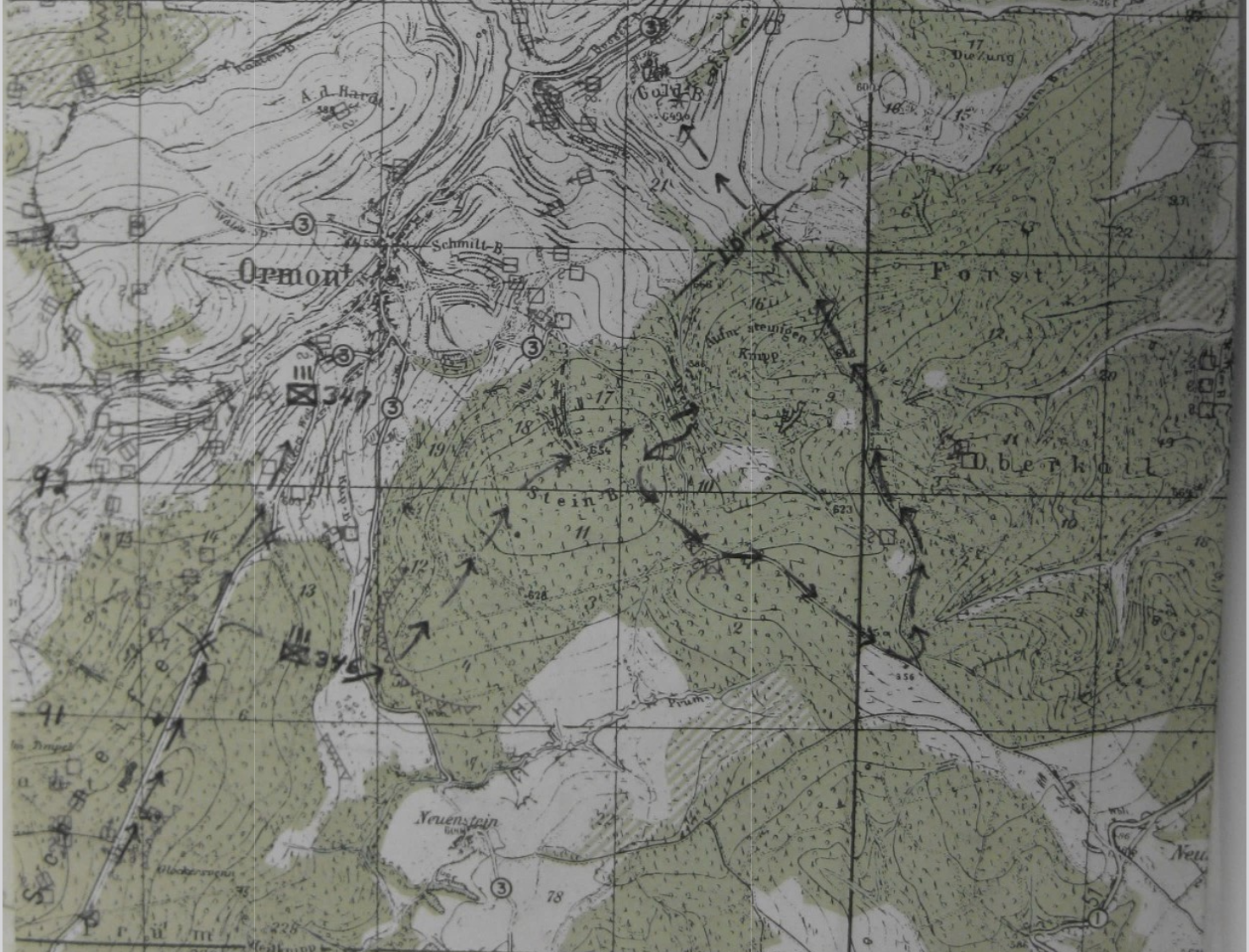
Then at 1500 hours on February 26th, the Regiment switched from their defensive positions back to the offense in a column led by the Third Battalion in the vicinity west of Ormont, right into the teeth of heavy enemy defensive fire. The attack was held up for a while by a road block but resumed early the next morning slowly and with great difficulty, held up again by road blocks which took much time to knock out. Many casualties were sustained from enemy mines and booby traps.
On 26 February 1945, the Third Battalion was given the mission of breaching the formidable fortifications of the Siegfried Line, near Ormont, Germany. The key terrain feature of the enemy defense was Gold “B” Hill, a high bald, detached hill from which the enemy could gain observation on our movements, and were able to effectively observe artillery, mortar, and neblewerfer fire on our forward positions and rear areas. This hill also dominated the road net leading east from Ormont to the Kyll River. The hill contained 15 twenty man pillboxes. In order to attack Gold “B” Hill it was necessary for the Third Battalion with its supporting tanks and TD’s to gain positions on Hill 648 from which its attack on Gold “B” Hill could be launched.
From the 26th of February until the third of March, the Battalion fought its way through heavy mine fields and dense woods in bitter cold weather to gain positions on Hill 648. Throughout this period the enemy infantry opposition was strong. Its artillery, mortar, and neblewerfer fire was deadly.
The Battalion was forward of the adjoining elements of the Division and received heavy artillery
cross fire from both flanks as well as from the front. Supply and evacuation were extremely difficult because of deep mud and lack of roads. Hand carry of both supplies and casualties was necessary over 3000 meters of extremely rugged terrain. Since food and ammunition had priority and supply was so difficult, it was impossible to provide the troops with either blankets or bedding rolls. As a result they spent five nights in their fox-holes in bitter cold weather with neither, although all carrying details that could be made available did every
thing humanly possible to provide them with these items.During this period, the Battalion received 171 casualties, many of these were caused from tree
bursts, which had a deadening effect on the morale of the men.At 1330 on 3 March 1945, the Battalion launched its attack from Hill 648 debouching from its heavy woods, passing across the open draw between the two hills and up the bald slopes of Gold “B” Hill, after a 20 minute artillery preparation. Under intense enemy artillery, neblewerfer, and small arms fire, the Third Battalion pressed its attack using marching fire and knocked out seven enemy machine guns, capturing the hill, which yielded 150 enemy prisoners of war and inflicting 100 enemy casualties. At this point, the enemy increased his artillery and mortar fire on the hill, and the Battalion dug in for the night in a perimeter defense.
The capture of the hill denied the enemy its observation and the artillery fire on our rear areas
ceased, permitting freedom of movement for our troops and supply to the front. It also broke the back of the enemy defenses in that sector of the Siegfried Line.At 0800 the following morning, the Battalion continued its attack over a distance of 5000 meters and captured Kerschenbach, after meeting stiff resistance, and suffering heavy casualties. It then poised itself for an immediate crossing of the Kyll River.
During the period of 26 February 1945 to 4 March 1945, the Battalion suffered 283 casualties, inflicted 263 enemy casualties, and captured 272 enemy prisoners. The Battalion advanced a total of 11,000 meters during this period, captured 38 enemy pill boxes, and 32 enemy machine guns.
All Battalions attacked in earnest and the force of their drive carried them past Stadtkyll across the Kyll River and into the towns of Junkerath and Schuller on the other side. These two towns, unlike those German villages encountered in the past, had not been damaged too greatly by artillery and air bombardment. With the exception of the railroad yards at Junkerath everything was intact. For the next four or five days, action slowed down to patrol duty and consolidation of positions. The Siegfried Line had been cracked and now the Regiment was poised for the drive to the Rhine
Additional information:
From: An Historical and Pictorial Record of the 87 Infantry Division in WWII:
Olzheim fell by nightfall of February 6. Neuendorf, just north of Olzheim, was next on the objective list. The third Battalion sent a “Tiger Patrol,”… into the town before dawn on February 9. Early that moning the rest of the battalion moved in. Company I attacked and won high ground east of Neuendorf… After the fall of Neuendorf, which marked the end of the first phase of cracking the Siegfried Line, the 346th Regiment, now under command of Colonel Curtis Renfro, took over all positions held by the 345th… A period of rest was granted divisions all along the front in which Ihey could resupply, reinforce and consolidate their positions. During the next fortnight the 312th Engineer Baltalion enlisted the aid of many infantrymen in the maintenance of roads that were chopped up, hub-deep over which an ever increasing amount of supplies, munitions and reinforcements were being carried forward.
From 346th Infantry:
For the next 18 days the Division held defensive positions. During this period of time patrols were sent frequently into the sector around Ormont and Neundorf to determine activity and resistance to be met there. During the 18 days that the Division was defending temporarily, daylight and night patrols of the 346th continuously prodded into the vaunted Siegfried Line through heavily mined and booby trapped woods, across open areas swept by fire from the pillboxes and through barrages of screaming meemie’s and mortars, plotting detailed locations of mine and booby trap fields, locations and fields of fire of pillboxes, and enemy strengths and dispositions. The enemy information was so completely and accurately known through patrol reports that at all times the Regimental operations map showed the location, strength and designation of all enemy troops to our front. One morning at 0500 a relief of an enemy unit was made and at 0800 the map showed the new unit in place, its strength, armament, and commanding officer, and the direction in which the relieved unit went.
Feb 16. Germany

Dear Folks,
   It won’t do any good to apologize but it likely seems like ages since I last wrote. Yesterday I received your letter of Jan 31 and since Daddy made a special request for me to put the country in, I’ll try to always do so. You said my last few V-mails had not been photographed so I am doing my best to make this one legible. I’ve wished several times that I had not left my fountain pen in my duffle bag before we moved into action. I guess that’s about the only thing I really cared about that I didn’t bring but I doubt now if we’ll ever see our bags again. I’d be happy if you would send me a cheap pen so there would be no difficulty in the V-mails going through. I was sure glad to hear that Mother had started a box on the way. If you included mostly things to eat, it can’t come amiss. I sort of hate to start asking for specific things along this line but if you’d like for me to, I could start a bunch of mother’s divinity fudge. I think I have gotten all the packages you mentioned. I’ve gotten Sunday school papers several times and the other day I received a bunch that contained a Reader’s Digest. Thanks. I know you are praying for me and I really know prayer helps. God has sure been good to me. Happy birthday Richard and Jim.
Love,  Donald
From: An Historical and Pictorial Record of the 87 Infantry Division in WWII:
(On Jan 30th) – All nine infantry battalions, with their supporting artillery, tanks and tank destroyers, moved east from the line of departure southwest of St. Vith through the deep snow and mountain forests. With the 346th Regiment, Lieutenant Colonel Donald E. Clayman commanding, setting the pace by executing an end-run around the enemy front lines to strike at his supply bases in Schonberg and Andler, the 345th and 347th Regiments moved forward against the enemy’s front lines to bring about his complete collapse in Belgium and run for the protection of his vaunted Siegfried Line. The last town in front of the Line to be captured, Roth, Germany, fell to the 87th Reconnaissance Troop on February 2.
With the 347th Regiment, Colonel S. R. Tupper commanding, on the left; the 345th Regiment on the right, and the 346th Regiment in Division reserve, the Siegfried Line lay directly ahead, its pillboxes, dragon’s teeth, bunkers and fortifications hidden by the snow cloaked forests of the Schnee Eifel mountains. But the line was well marked by the pyrotechnic bursts of fire that Division Artillery, with attached Corps units …placed upon it. “The Infantry’s Best Friend,” the Artillery, had kept pace with the advancing doughboys and by the time General Culin was ready to send his men in the Line the artillery had the way “well prepared.”
The sector of the Line, directly in front of the Division, was laid out in the form of a huge “Y” with the two prongs leading northward. Those prongs branched out from the vitally important little town, Ormont… The Third Battalion, passed through the Second Battalion and advanced along the military road towards the main crossroads. The bursts of artillery, machine gun, mortar, and automatic weapons fire from the foxhole-surrounded pillboxes and bunkers, and hundreds of mines, both anti-tank and anti-personnel, were the obstacles the hard fighting doughboys had to overcome to win their objective.
From 346th Infantry:
The morning of the 30th the Third Battalion jumped off toward Andler but were unable to cross the river into town…the First Battalion captured Andler at 0530, 1 February…The following few days were spent moving to forward positions around Auw, Krewinkle, and Weckerath.
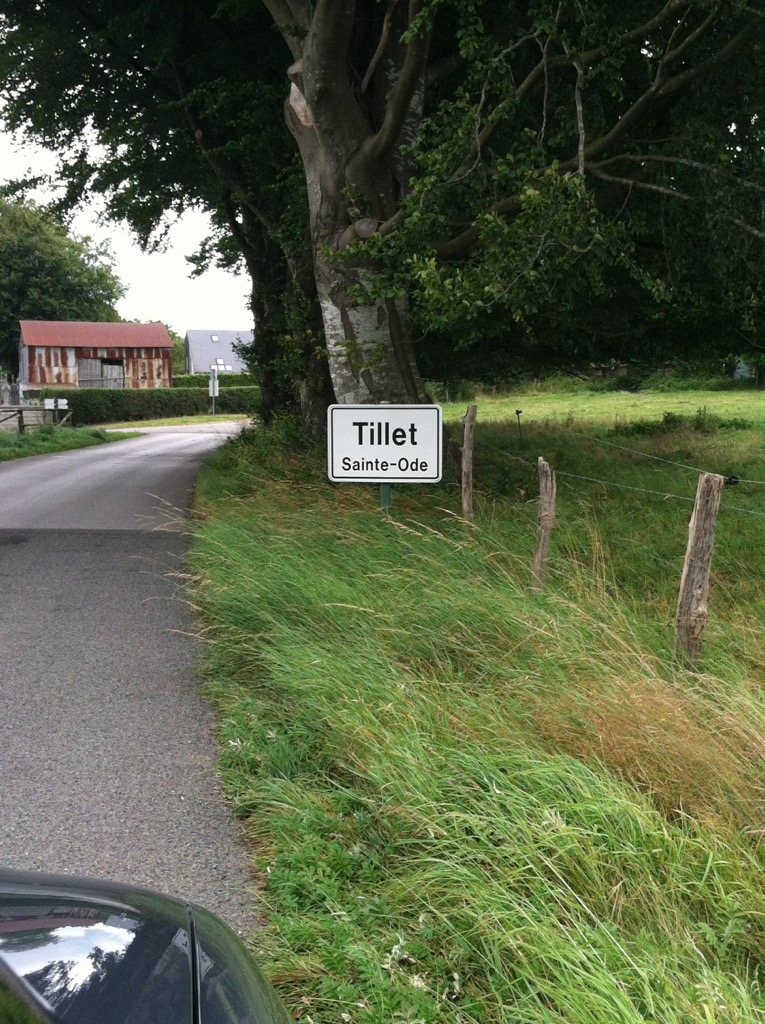
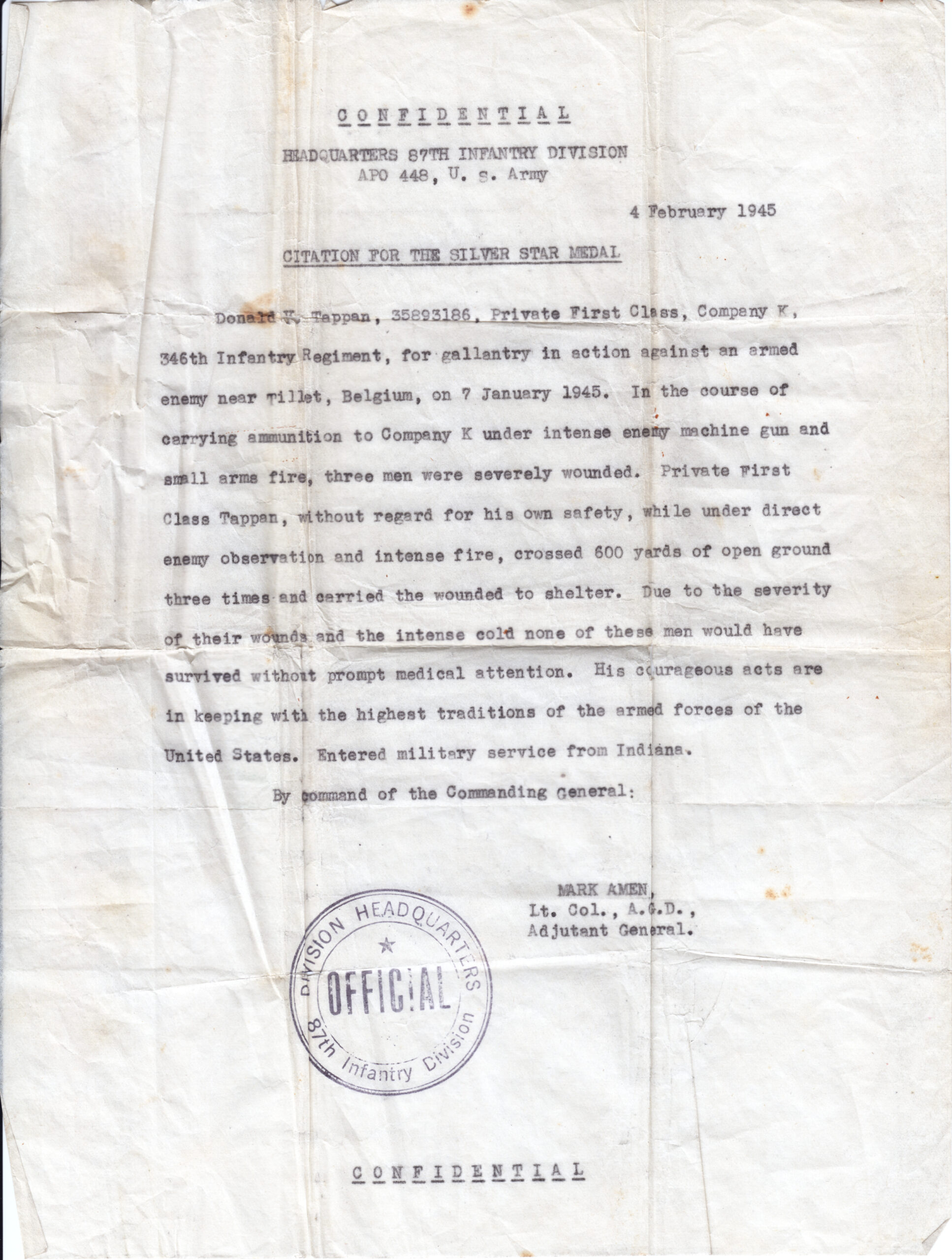
Note: On Jan 31, 1945, Pfc. Donald V. Tappan was awarded the Silver Star for his actions at Tillet, Belgium. The citation, and the order for presentation from Regimental Headquarters, are dated February 4th.
Feb 5, 1944

Dear Folks,
   I guess I might as well start this letter by asking you to share it. I’m pretty sure this will be all I’ll get written. I sure was glad to get mail again last night. I got letters from you dated Dec. 18, Jan 5 and 15. It made me happy, of course, to get the late news but I got the biggest kick out of the oldest letter.  Daddy had written most of it and it was so chatty that it made me almost feel as if I’d spent a little time at home. I sure don’t mean any reflections on anyone else’s writing but that’s just the way it effected me. I supposed what did it most was his telling about Mother ironing on Saturday night. How are things at school coming? By the time this reaches you it will be almost Richard’s birthday. I sure send all my best wishes. I know it will be a crisis in his life and I hope, pray and know the Lord will take care of things. Keep trusting.
Love, Donald
The following is the official “After Action Report” for the 346th Regiment, February 1945, from the 87th Infantry Archives
From: An Historical and Pictorial Record of the 87 Infantry Division in WWII:
A river crossing demonstration was put on to draw the enemy into their sector in front of us while three divisions to our left made full scale assault crossings of the Sauer River. Two “Tiger Patrols” from the Third Battalion, 346th Regiment, assaulted and captured the large city of Wasserbillig and held it until the Division was withdrawn from Luxembourg and sent back into Belgium on January 27 to have the honor of chasing the German invaders completely out of Belgium and of “Cracking the Siegfried Line.”
The battles in the Saar, in the Belgian Ardennes, in Luxembourg, were past victories for the men of the 87th “Golden Acorn” Infantry Division on January 27 when Generals Patton and Middleton called upon them once more to fight a battle that was to test the mettle of every man in the division. The assignment: Drive the enemy out of Belgium and crack through the Siegfried Line.
From 346th Infantry:
On January 23 a strong patrol moved in and captured Wasserbillig since that town was the more important. WasserbiIlig was a critical town on the route between Trier and Luxembourg, and the Germans had established a bridgehead across the Moselle River.
BACK TO THE ARDENNES
On the 25th the Regiment moved from the area along the Sauer-Moselle Rivers to a sector in the vicinity of Hautbellain, Luxembourg. On the same day Colonel Richard B. Wheeler was relieved of command of the Regiment and Lt. Col. Donald C. Clayman, from the Ninth Division assumed command. January 26 found the Battalions moving into assembly areas and then relieving elements of the 17th Airborne Division south of St. Vith. Resistance stiffened as the Regiment moved on St. Vith. The First Battalion captured Thommen and Gruflange, Company B making the assault on both towns, and the Regiment moved into St. Vith late in the evening of the 28th, making contact with the Seventh Armored Division there.
Utter devastation greeted the eyes wherever one’s glance might stray. St. Vith was a vivid example of modern warfare, for St. Vith was a ghost town in every sense of the term, almost completely leveled. From St. Vith, the Regiment made a night motor march through the sector of the 82nd Airborne Division with a mission of moving south and southeast from Herresbach to cross the Our River, take Andler and Schonberg. The march was executed under the most difficult conditions, since all roads were drifted full of snow, and the weather, although clear, was bitter cold. Overhead, buzzbombs thundered through the night on their way to London.
Belgium
January 29,1945

Hello Family,
   I sure want to get you a letter written today. I know there is no use apologizing about my lack of writing because I have told you I’ll do my best. There have been a few times that I might have dashed off a letter but I try to get every minute of relaxation I can. You can see that I am just as lazy as ever.
   I might even have written you a V-mail now had I not had a money order to send. As far as news goes, I won’t have enough to make this  much of an air mail letter. You will have to just use your own judgement on the money. I can’t spend it or any part of it here. If there is anything (watch, etc.) that I lack on you can finish it up on this. If not, I guess bonds are about the best place for it. But as I said, use your own judgement.
   I got mail from you several days ago so before long I expect to be hearing again. I got letters up to January 8. I also want to tell Grandma Carver that I got letters from her dates Jan. 2 and Nov. 8 at almost the same time. I know you’ll let her know. I also got a few November letters from you.I guess they all got mixed up in England or somewhere.
   I thought about Daddy’s birthday the other day but it wouldn’t have gotten there in time for the 25th anyway. That reminds me that I don’t think I ever did even mention Mary’s birthday. I hope you’ll forgive me for things like this.
   About the only news I can and want to tell you about is that I had a little pass to the city of Luxemborg the other day. This was the first free time any of us have had since we hit France. The city hadn’t been hit too hard but of course there were only civilian necessities to sell. We couldn’t even buy anything to eat. We had to mooch enough to keep us going from some soldiers stationed there. They were real god to us though. I guess about the most good we got from the trip was seeing the civilians. They were well dressed (as a whole) and almost reminded us of home. Just about time to leave we found an air corps recreation room where we could buy sandwiches and coffee and just to be able to spend a little money for something did for us just what we needed.
   If you look forward to mail as much as I do I hate to disappoint you so often. I got mail only 4 or 5 days ago and I am already wondering how things are going. It sure won’t be long before it will be basketball tourney time again.
   Let’s keep trusting and praying. There is no use to worry. If you want to know how I feel about worrying, I think sometimes that I don’t worry enough. I guess I think too much about the future.
           Lots of love,
              Donald
From: An Historical and Pictorial Record of the 87 Infantry Division in WWII:
Action in Luxembourg was described by the doughboys, worn out after their terrific fighting in Belgium, as “a frontline rest area.” Reinforcements were received, trained and outfitted and the Division instituted a pass policy, allowing a certain number of men three days in Luxembourg City and others three day passes to Paris.
From 346th Infantry:
On the 13th of the month the unit was in Division reserve near Rondu, Belgium, the Regimental Command Post being at Aspelt, Luxembourg.
DEFENSE OF LUXEMBOURGThe order to move to a new sector near Betzdorf, Luxembourg was received and carried out on the 15th. The move to the new sector enabled the Regiment to take over the mission of the Eighth Infantry Regiment of the Fourth Division who were located there. The position was a defensive one, the main action consisting of patrolling.
Jan 19,1945

Dear Folks,
   I guess you couldn’t say it is because of lack of time that I haven’t written but more correctly lack of opportunity. I started a letter a few days ago but things happened before I got it finished. I sure was glad to hear from you this morning. I got letters dated Dec. 31 and Jan 1 and also three Tribunes (Nov 28 and Jan 3 and 11). I am really glad to get the papers even though I only get about one out of every week. I wanted to thank you earlier but about a week ago I got the box from you that contained Mary King’s cookies. A surprise like that really is appreciated. That chicken I guess was the best I ever tasted.  I don’t know whether those fudge candy bars are something new or not but they tasted enough like home made candy to really be good. You can send me some of them any time you have an extra corner. Please thank Mary King for me, at present I’m OK and am still trusting and praying. God Bless you.
Love, Donald
From: An Historical and Pictorial Record of the 87 Infantry Division in WWII:
All along the front the enemy was throwing everything he had into the fight- artillery, mortars, machine guns, tanks and self-propelled guns of all calibers. Tillet, situated on a barren hilltop between two larger hills, became the key town in the enemy’s scheme of reinforcement and supply. The Gerimont Station Hill was on the east. A forest covered ridge on the south which connected with the hill on the southwest was the attack problem that faced the doughboys.
On the afternoon of January 6 the attack on Tillet by the Third Battalion, 346th Regiment, started. As the fighting men of L and I companies came over the crest of the Gerimont Station Hill all hell broke loose. Company K coming out of the trees on the ridge to the south met the same resistance. The attack was held up and the battalion was pinned down.
From 346th Infantry:
(On 6 January) the new mission was to attack, capture and hold the town of Tillet. The Third Battalion moved to the high ground east of Tillet, and later in the day Tillet was reported burning. The Third Battalion attacked the town but were unable to capture it.
On 7 January the Third Battalion again attacked Tillet with no success. The enemy apparently were determined to hold the town at any cost. During the night German patrols were very active around our positions, and the outfit’s casualty toll was extremely high. … Attack after attack was repulsed by the stubborn enemy garrison… Digging in was necessarily slow and laborious due to frozen ground and heavy enemy artillery fire. Before the foxholes could be dug to an adequate depth, an enemy tank attack had been launched. Artillery support could not be used because of the lack of communication and observation, and the position was situated in such a way that no tank destroyers could be brought up in time. The result was a withdrawal of the two Battalions to their old positions from where they started the attack. Much equipment had to be abandoned and the resulting casualties for the day were very high.
From an email note received in August 2012, just before a visit to Belgium – from 93 year old Retired Lt. Col. Glenn Doman1On the morning of January 7, 2nd Lt Glenn Doman led 21 men into Tillet, for an 7 hour engagement which is described in a number of documents. Doman later stated that the standard procedure would be to take 2 squads into an engagement and keep one in reserve. Based on the description of Doman’s action (in particular, that the group suffered only 2 casualties, one killed and one wounded), comparing it to the events described in the citation, it seems likely that Donald was in the reserve squad and that some of them were carrying ammo to the rest of Company K, attacking as described above, who was Donald’s Platoon Leader at Tillet, and later Company Commander for K Company:
“Your father Donald was one of my boys in K (King) company, 346th INF Regiment, 87 Infantry Division (Golden Acorn) and it was a high honor to serve with a great hero like your dad. On January 7, 1945 around Tillet Belgium, one of our boys was seriously wounded in an open field. Your dad ran into the field under enemy fire and helped recover our wounded boy, most certainly saving his life. I was honored to recommend him for the Silver Star.”
Clipping from the Alexandria Indiana Times-Tribune, April 1945
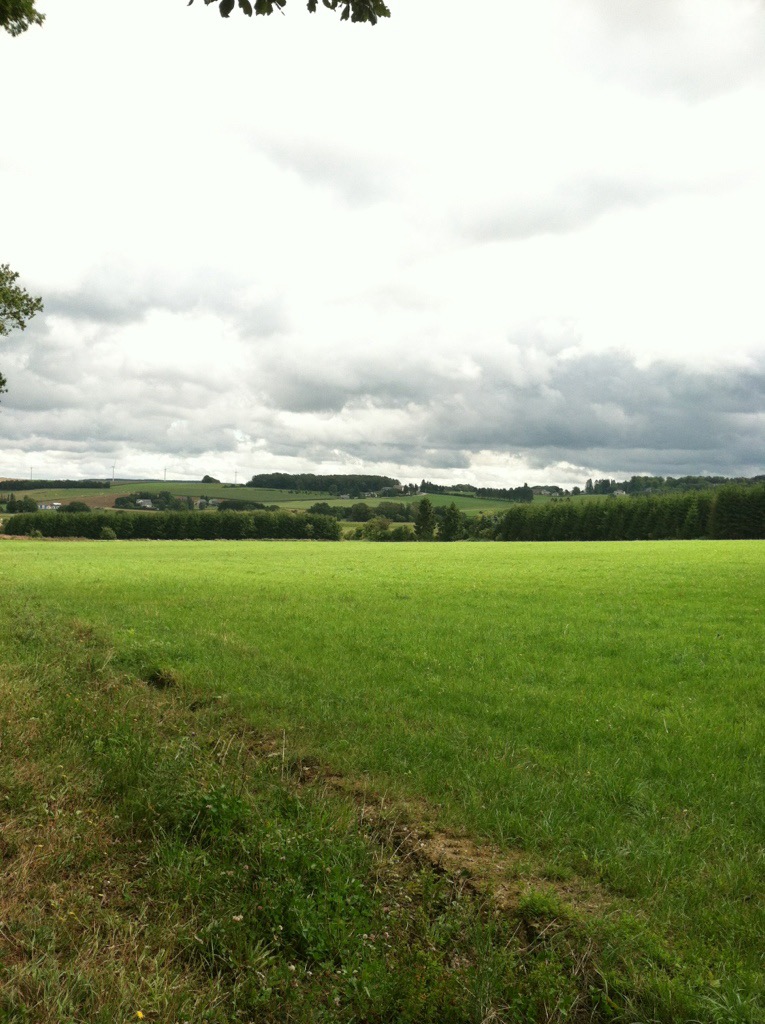
Fields near Tillet, Belgium photographed in 2012: